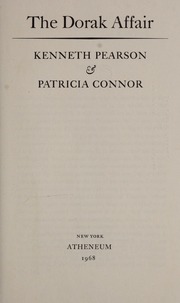
The Dorak Affair: Unmasking Archaeology's Enduring Mystery
The world of archaeology is often perceived as a realm of meticulous scientific discovery, unearthing the secrets of civilizations long past. Yet, even in this field, sensational mysteries and controversies can emerge, casting long shadows over even the most celebrated discoveries. Few stories encapsulate this tension between groundbreaking achievement and baffling enigma quite like the
Dorak Affair. At its heart lies a tale of dazzling ancient treasures, a captivating stranger, and a scandal that not only derailed the career of a brilliant archaeologist but also halted one of the 20th century's most significant excavations. This enduring mystery continues to fascinate and challenge our understanding of truth, evidence, and the ethical responsibilities inherent in uncovering history.
The Discovery that Shook the Archaeological World (and Its Sudden Halt)
In the annals of archaeological history, James Mellaart stands as a monumental figure, primarily for his pioneering work at Catalhoyuk. In the fall of 1958, Mellaart, then affiliated with the British Institute of Archaeology, made a discovery that would redefine our understanding of early human civilization: Catalhoyuk, a sprawling Neolithic settlement in central Anatolia. Hailed as the largest and most "urban" Neolithic village ever found, Catalhoyuk presented an unprecedented window into a complex prehistoric society.
From 1961 to 1963, and again in 1965, Mellaart led extraordinarily productive excavations at the site. His teams unearthed scores of interconnected mudbrick houses, complete with intricate relief carvings, vibrant wall paintings, enigmatic statues, amulets, and sophisticated tools. The sheer volume and quality of the finds repositioned Catalhoyuk as a pivotal site for understanding the Neolithic Revolution, urbanization, and early human artistic expression. Its importance was, and remains, undisputed.
However, just as Mellaart was at the zenith of his career, a shadow began to fall. In 1964, and again definitively in 1966, the Turkish government shockingly refused to grant Mellaart further permission to excavate at Catalhoyuk. The reasons were clear and devastating: the fallout from the
Dorak Affair. This decision not only cut short a vital investigation into humanity's past but also ignited a controversy that would plague Mellaart for the rest of his life, fundamentally altering his legacy. To delve deeper into the impact of this decision, you can read more about
Why The Dorak Affair Halted Catalhoyuk's World-Class Digs.
A Fateful Encounter: The Girl on the Train
The origins of the
Dorak Affair trace back to the summer of 1958, mere months before Mellaart's initial discovery of Catalhoyuk. Mellaart recounted his version of events in detail to reporters Kenneth Pearson and Patricia Connor, whose subsequent 1967 book, "The Dorak Affair," brought the story to wider public attention. According to Mellaart, he was on a train journey from Ankara to Izmir, a city on Turkey's Aegean coast. During the trip, a young woman entered his compartment and sat opposite him.
Mellaart described her as "very attractive, in a tarty way." What immediately caught his seasoned archaeological eye was a solid gold bracelet adorning her wrist, which he recognized as dating to the Bronze Age. Intrigued, Mellaart engaged her in conversation. The woman, who introduced herself as Anna Papastrati, claimed her family possessed a substantial collection of similar ancient objects. She extended an invitation to Mellaart to visit her home in Izmir to view the remarkable hoard. For an archaeologist with Mellaart's passion and expertise, such an invitation would have been irresistible, promising a rare glimpse into undocumented history. He accepted.
This seemingly chance encounter set in motion a chain of events that would forever alter Mellaart's professional life and leave an indelible mark on the archaeological community. The narrative of the "girl on the train" lends the
Dorak Affair an almost cinematic quality, adding a layer of intrigue and personal drama to what would become a major academic scandal.
Unveiling the Dorak Hoard: A Glimpse into Ancient Splendor
Upon arriving in Izmir, Mellaart recalled a somewhat convoluted journey – a taxi, then a ferry, then another taxi – before reaching Anna Papastrati's home at 217 Kazim Dirik Street. What he allegedly witnessed there was nothing short of astonishing. Anna, he claimed, presented him with a chest of drawers overflowing with an incredible collection of artifacts.
Mellaart spent several days at Anna’s house, meticulously drawing the objects and copying notes, written in Greek, from old photographs. These photographs, Anna explained, depicted two tombs her family had supposedly excavated near the village of Dorak between 1919 and 1922, during the Greek occupation of northern Turkey following World War I. The "Dorak Hoard," as it came to be known, was described as a dazzling array of precious materials and exquisite craftsmanship. It included:
* **Gold and Silver Objects:** Scepters, bracelets, daggers, swords, axe heads, and vessels, including a particularly striking two-handled gold drinking cup.
* **Semi-Precious Stones:** Lapis lazuli, amber, marble, and obsidian, incorporated into various items.
* **Royal Relics:** Most remarkably, fragments of a gold sheet that had once covered a throne. An inscription on this sheet, in Egyptian hieroglyphics, reportedly referred to Sahure, the second pharaoh of Egypt's 5th Dynasty (circa 2450–2325 B.C.).
Mellaart, based on the style and context of the finds, surmised that the throne was a gift from Pharaoh Sahure to the ruler of the Yortan culture, which bordered Troy in the mid-third millennium B.C. If genuine, this collection would have been a find of unparalleled historical and artistic significance, offering crucial insights into Bronze Age interconnections between Egypt and Anatolia. It would have represented a private collection rivaling major museum holdings.
However, despite Anna’s promise to send Mellaart photographs of the objects, they never materialized. She did, however, send him a letter dated October 18, 1958, granting him permission to publish his drawings. Mellaart subsequently published a brief, one-page article accompanied by three pages of his meticulous drawings in the *Illustrated London News*. This publication, rather than cementing a new discovery, ignited the flames of doubt and suspicion, leading to the full-blown
Dorak Affair.
The Lingering Shadows: Aftermath and Analysis of the Dorak Affair
Mellaart's publication of the alleged Dorak finds in the *Illustrated London News* sparked immediate controversy. Turkish authorities were incensed. The supposed discovery of such a magnificent collection, allegedly excavated clandestinely during a period of foreign occupation and now seemingly held in private hands, represented a significant loss of national heritage. The lack of physical evidence – no photographs, no artifacts presented for official inspection, and no verifiable trace of Anna Papastrati or her family – fueled intense skepticism and anger.
The Turkish government accused Mellaart of complicity in the illicit antiquities trade or, worse, of fabricating the entire story. The allegations spiraled, leading directly to the revocation of his excavation permits for Catalhoyuk, effectively ending his groundbreaking work there. The incident became a symbol of distrust between foreign archaeologists and host nations, highlighting critical issues of artifact provenance, national sovereignty over cultural heritage, and the ethics of reporting undocumented finds. This scandal is central to understanding
Mellaart's Dorak Affair: Scandal, Treasure, and Lost Excavations.
Years later, the debate continues. Was Anna Papastrati a real person? Did the Dorak Hoard exist, perhaps spirited away into the black market, or was it a brilliant, perhaps desperate, fabrication by Mellaart to gain further prestige? Mellaart steadfastly maintained his account until his death, but no independent corroboration ever emerged. The street address he provided yielded no Anna Papastrati, and no trace of the family or the claimed Dorak excavations was found.
Lessons from the Mystery: Archaeological Ethics and Due Diligence
The
Dorak Affair serves as a potent case study in archaeological ethics and the importance of verifiable evidence.
*
Provenance is Paramount: This affair underscored the critical need for clear, documented provenance for all archaeological finds. Without a legitimate chain of custody, objects, no matter how magnificent, lose much of their historical value and become susceptible to questions of illicit trade.
*
Verification and Collaboration: Mellaart's actions highlight the dangers of relying solely on personal accounts, especially when dealing with undocumented private collections. Modern archaeological standards demand rigorous verification, involving multiple experts, official channels, and transparent reporting.
*
Impact on International Relations: The incident strained relations between the British Institute of Archaeology and Turkish authorities, impacting future archaeological collaborations. It reinforced the importance of respecting national heritage laws and fostering trust between international teams and host governments.
*
The Lure of the Unknown: The story also explores the human element – the archaeologist's insatiable curiosity and the potential for a "once-in-a-lifetime" discovery to override caution.
The book "The Dorak Affair" by Pearson and Connor remains a crucial historical document, offering an early journalistic investigation into the controversy. Its enduring relevance lies not just in recounting a thrilling mystery, but in prompting reflection on the standards and responsibilities inherent in the archaeological profession.
Conclusion
The
Dorak Affair stands as one of archaeology's most captivating and enduring enigmas. It is a story of a brilliant mind, the potential of a legendary treasure, and a mystery that, over six decades later, remains unsolved. Was Mellaart the victim of an elaborate hoax, a purveyor of tall tales, or a witness to a genuinely spectacular but lost collection? The absence of a tangible "Dorak Hoard" leaves a void, a tantalizing "what if" that forever ties Mellaart's name not just to the triumph of Catalhoyuk, but also to this profound uncertainty. The affair serves as a powerful reminder that while archaeology unearths the past, its own narratives can be fraught with human complexities, ethical dilemmas, and secrets that even time cannot fully unveil.